April 24, 2022

Hmmm! I'm at Umunhum

If you saw a windowless concrete eight-story cuboid building perched improbably atop a 3,500-foot mountain, like a sentinel against the clear blue sky, you must be looking at Mt Umunhum in the Santa Cruz mountains. The Cube is visible from miles away and this mountain was opened up to the public only in 2017, almost four decades after being decommissioned as part of a US Air Force station that housed about 125 airmen and their families in its heyday.
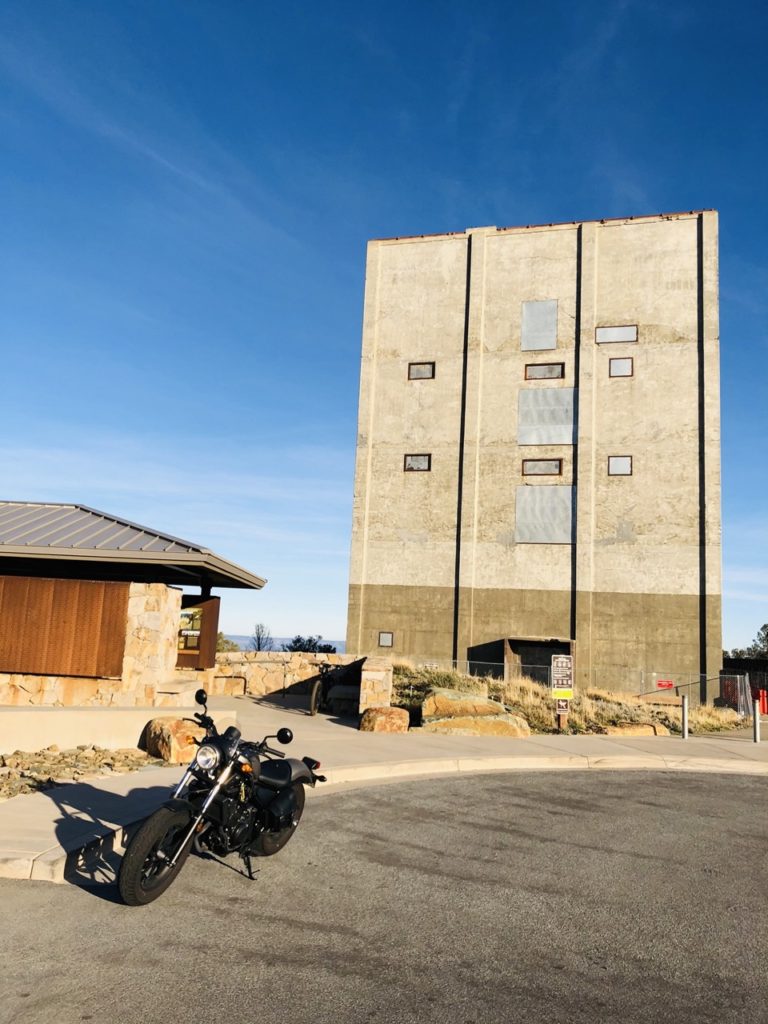
After riding east on Hicks Road from the town of Los Gatos into the Sierra Azul Open Space Preserve, I turn right and pick up Mt Umunhum Road to begin my ascent of the eponymous mountain. It’s early morning and I have the mountain almost to myself. The motorcycle leans eagerly around the curves, appearing to enjoy the cold mountain air and the light fog almost as much as its rider.

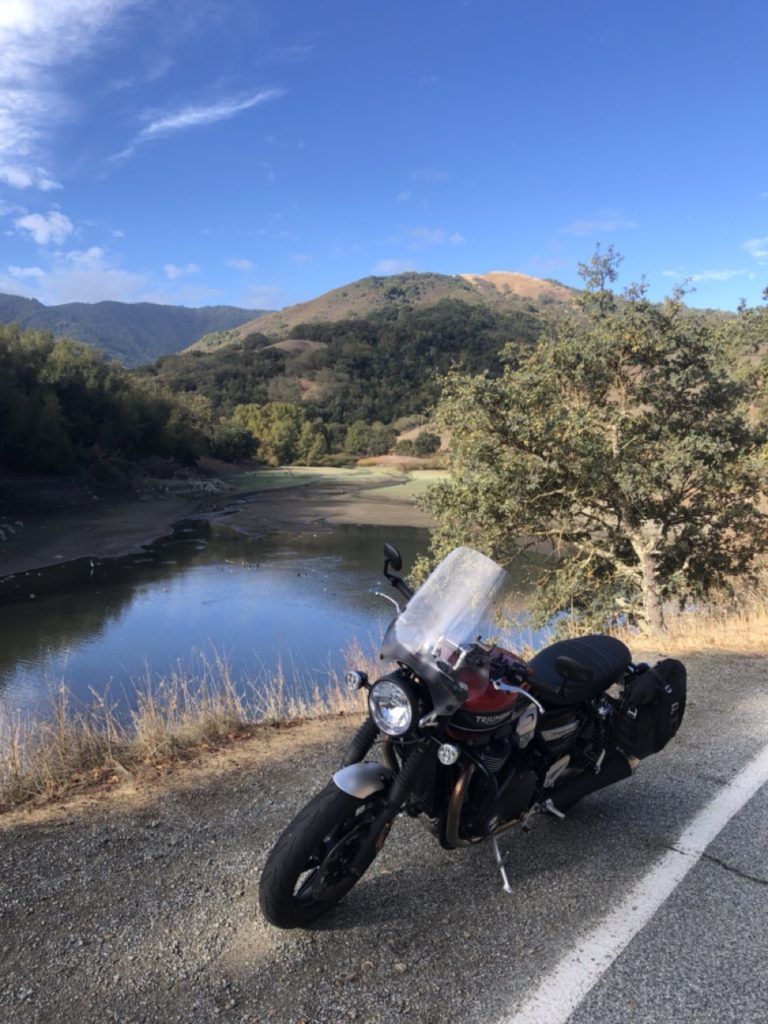
I stop at the Bald Mountain parking area to enjoy the views of the valley and the Almaden reservoir far below. As it swirls around the mountain, the road finds the gaps between trees to reveal occasional views of the bizarre mountaintop with its anomalous cube.

The cube was part of an early warning system set up in 1957, eight years after the Soviets had detonated their first atomic bomb and on the same year they would usher in the Cold War by putting an unremarkable two-foot metallic orb called Sputnik into low Earth orbit, and a mere three years before they would detonate the world’s most powerful thermonuclear device over Novaya Zemlya—deep within the Arctic Circle—that could have inflicted third-degree burns upon a hapless herder more than a hundred miles away, had he picked just that moment to step outside to milk his fondest reindeer for his morning coffee.
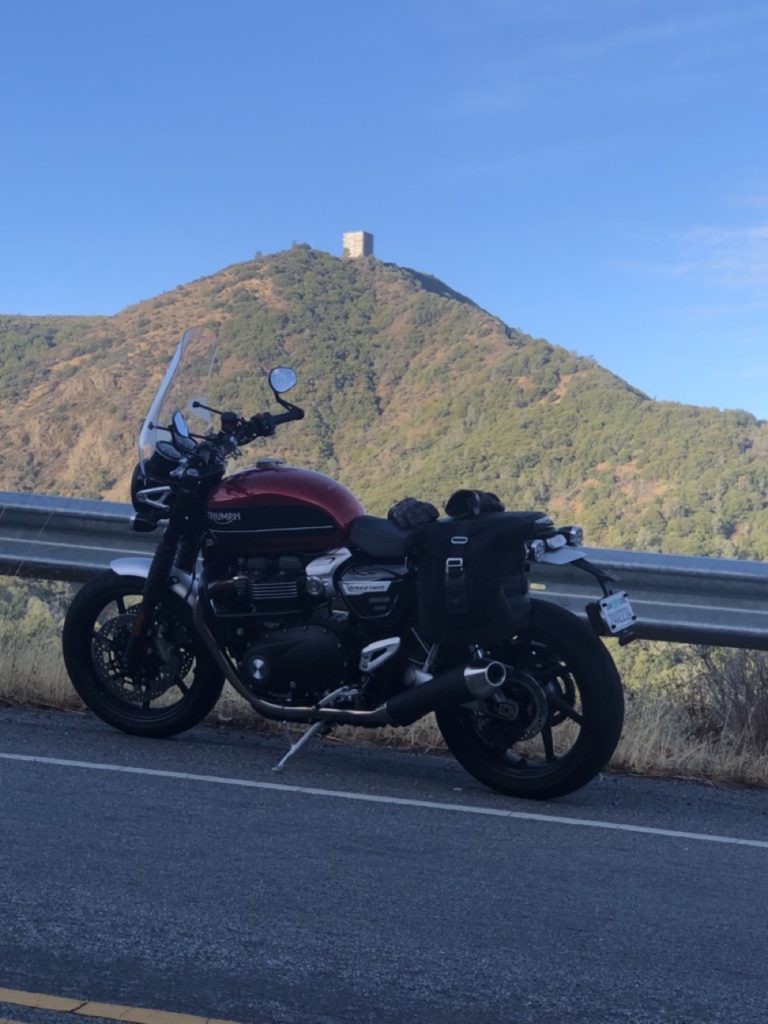
This unlikely mountain was called upon to do duty for our national defense, against unrelenting Soviet progress and military prowess. An 85-foot tall and 60-foot wide concrete fortress was erected and a massive red-and-white 150-foot sweeping radar hoisted above to scan the foreboding western skies—five times a minute—anxiously looking for the first signs of the cataclysmic Red menace.

Meanwhile, the folks in the towns of Los Gatos and San Jose lived through the hedonistic Sixties reassured that their skies above were keenly watched while they partied below, even as their radios would bleep five times a minute and put a lousy dent on their Jimi Hendrix Experience!

There’s something surprisingly asymmetrical when riding a motorcycle: cornering. Taking a right corner is always much harder than taking a left one. When you ride on the right side of the road and prepare to take a left turn, your eyes can see further, and through the turn, because of the space afforded by the oncoming lane on your left. By picking the line early and making use of the full width of the road, a rider can execute left turns precisely, even if the corner tightens up faster than expected.

Right turns can be blind, since you cannot easily see through the corner while riding on the right side of the road, especially when a mountain side looms to your right. A mistake in judging a right turn can run the motorcycle wide enough to drift across the centerline and put it directly onto the path of oncoming vehicles. Right-handed riders might also be more inclined to rely on their right eye, which has a natural advantage on left turns but is almost useless on the right. Many motorcycle accidents happen on poorly-judged right turns.
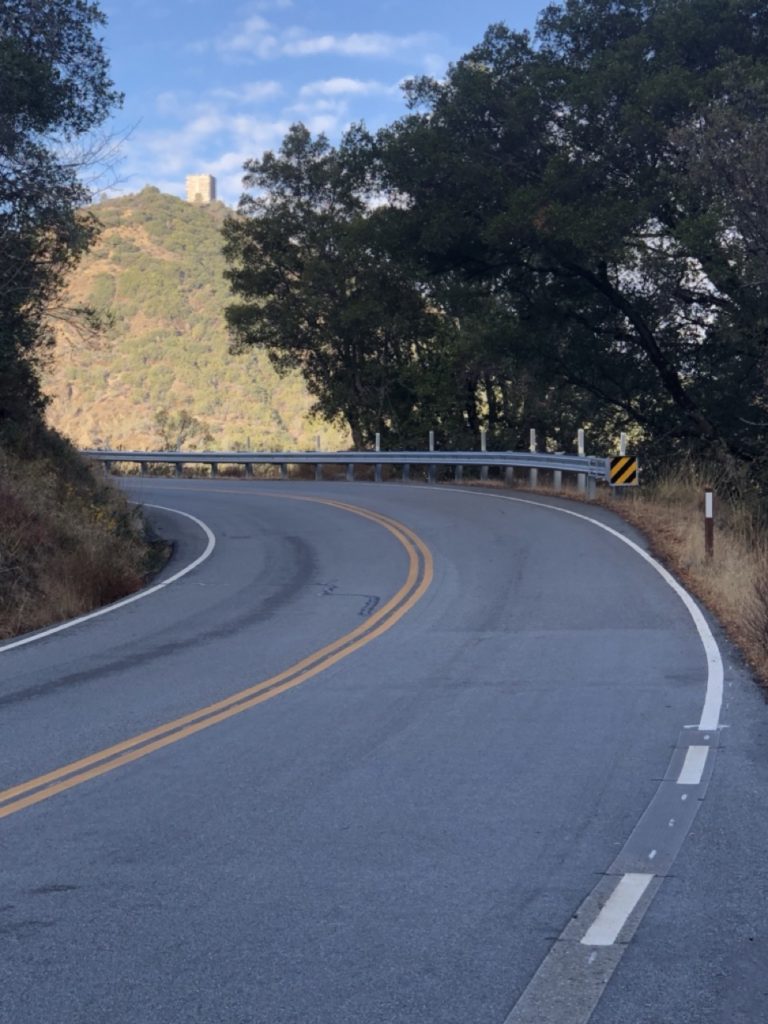
Training your vision is essential to safe riding. You constantly watch the road surface for surprises conniving to unseat you. You must consciously look where you want to go and this can be quite disconcerting when cornering, for you must turn your head and almost look over your shoulder and through the corner to the far end of the curve, trusting your peripheral vision to watch the road immediately ahead.

I park the bike at the top and walk up to the unsightly cube that hides a dazzling—almost 360 degree—view of Silicon Valley, the mountains across the bay, and the dark ocean to the west.

As I walk around, I imagine a young bored Cold War airman in brown camouflages sitting inside that concrete cage in front of a deeply recessed green terminal with a fat click-etty keyboard, a smoldering filterless Camel with an inch-long-ash-tip dangling precipitously from the corner of his mouth. A half-eaten ham sandwich sits on a well-thumbed issue of Playboy on his desk as he languidly watches for that one sinister ping that would metamorphose into a squadron of long range Tu-95 Soviet bombers (NATO codename, “Bear”) carrying atomic bombs that would ruthlessly take out San Francisco, LA, Seattle, and Chicago in one single scorching orchestrated first-mover attack, sending half the continent instantly up to Jesus and making Communism the religion for the world… once all the dust had settled and St Peter’s Gate had fallen off its tired hinges.
Our twenty-something airman’s only job was to stop all this before it actually happened. Since that terminal radar blip never came, he probably kept smoking them Camels and putting away ham sandwiches until one day the bosses put him out to pasture down the mountain, so they might bring up a fresh set of keen eyes that would lock on to that unremitting green radar screen inside the blue darkness of the whopping concrete bunker… and take possession of the raggedy Playboy.

I ride back, mindful to avoid using the rear brakes going downhill, given the lighter load that drops the traction of the rear tire. I get back onto Hicks Road and continue to the town of Old Almaden.
Old Almaden was a mercury mine, the first of any kind in California, that had started operating even before the Gold Rush. It was named after Almaden in Spain, the world’s largest and most productive quicksilver mine and lived up to its christening by becoming the world’s second largest, producing over 70 million dollars of quicksilver over its lifetime—a fortune unmatched even by any gold mine in the state.

The earliest miners from Mexico and Spain were followed by English miners from Cornwall, with a history of mining going back to the Bronze Age. Later, Chinese immigrants worked the mines, the kitchen, and the laundry. New Almaden developed a Spanishtown and an Englishtown, but curiously no Chinatown. That San Jose had five, may have had something to do with it.

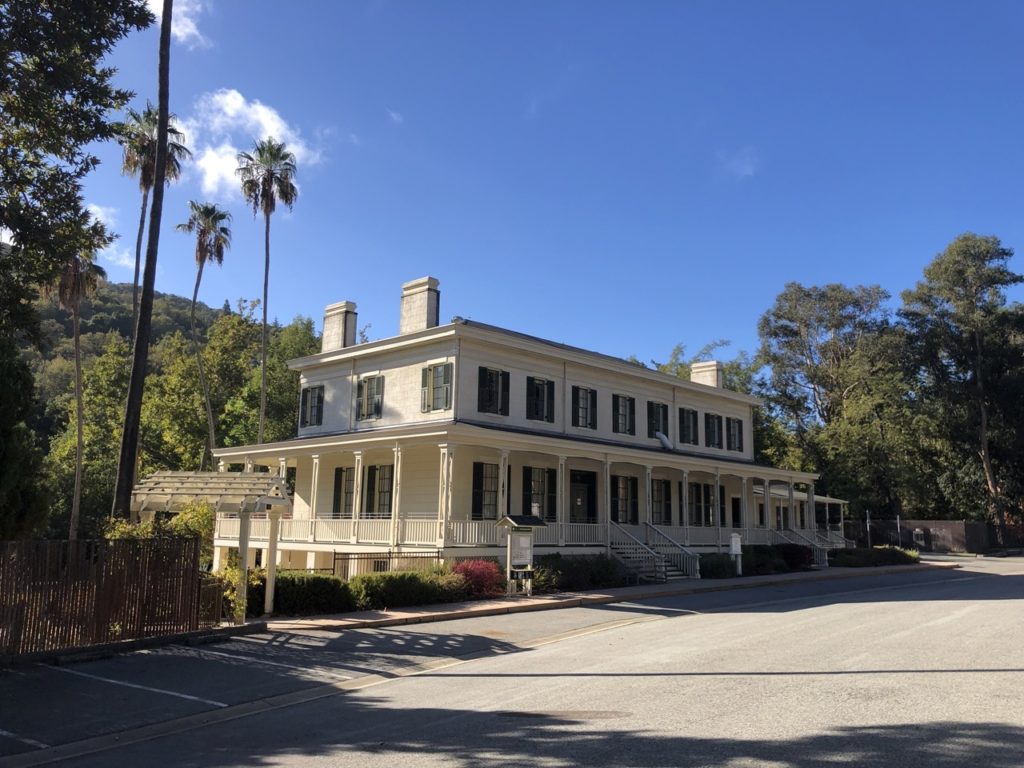
I pull into the grounds of the stately Casa Grande, a three-story brick, adobe, and wood structure, that was the palatial residence of the mine’s manager and is now a mining museum. It is closed, so I walk through a small gazebo by the side of the building to gaze at the landscaped gardens behind.
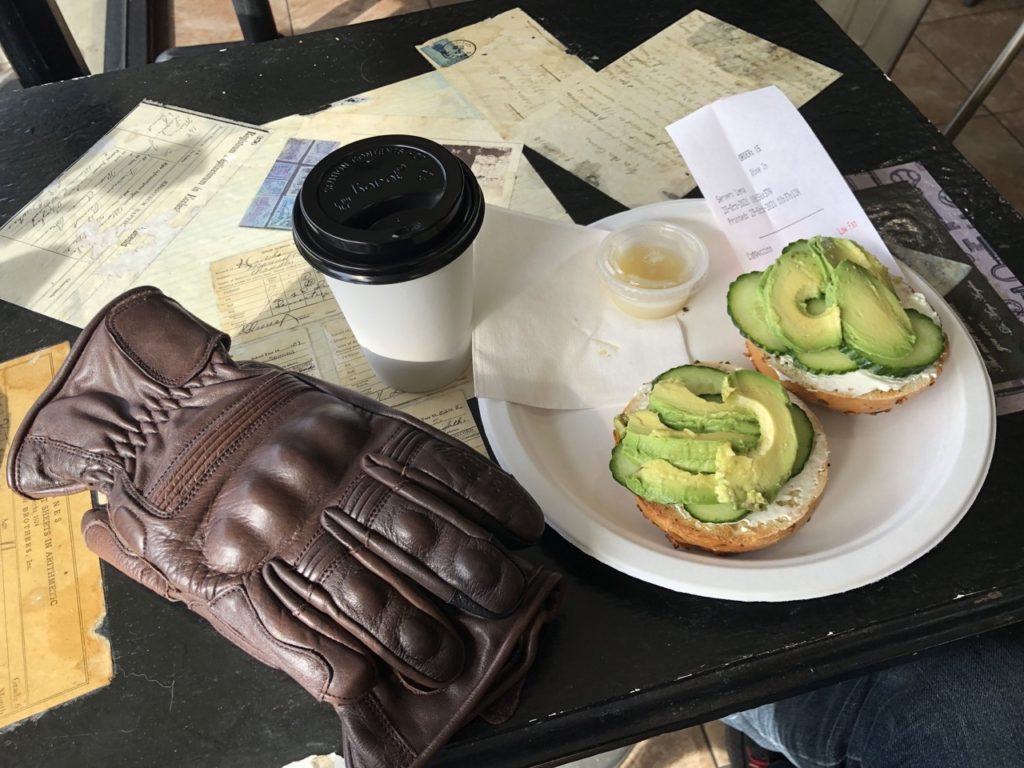
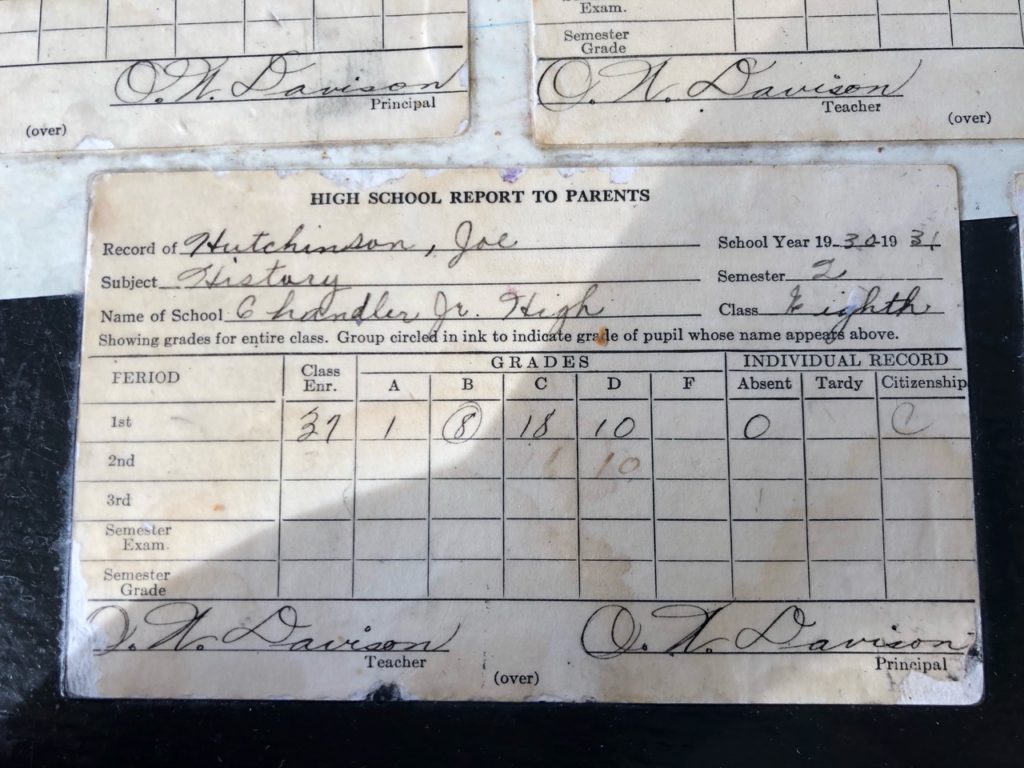
On my ride back, I stop for breakfast at the Blvd Cafe in San Jose. Working on a bagel with cream cheese and avocado, a laminated faded grade school report embossed on my tabletop catches my eye. It’s for Joe Hutchinson from Chandler Junior High—one of just eight students to secure a B in History in his eight grade class of thirty seven students.

The year?—1930! I wonder what ever happened to that studious Depression-era kid.
April 3, 2022

Coffee and Surf

When the menu flaunts four types of avocado toasts including one that combines pickled red onions with creamy almond butter that you can wash down with lavender or honey bee latte, you’re probably in a California cafe. Should faces with beards and nose rings outnumber wrists with Apple watches, you’re not in Silicon Valley. If the dude behind you in the line is nestling an eight or nine-foot surfboard in bronzed arms emblazoned with a deep blue tattoo that continues under his hooded shirt before emerging on the other side to complete the picture, you’re in Santa Cruz, baby!

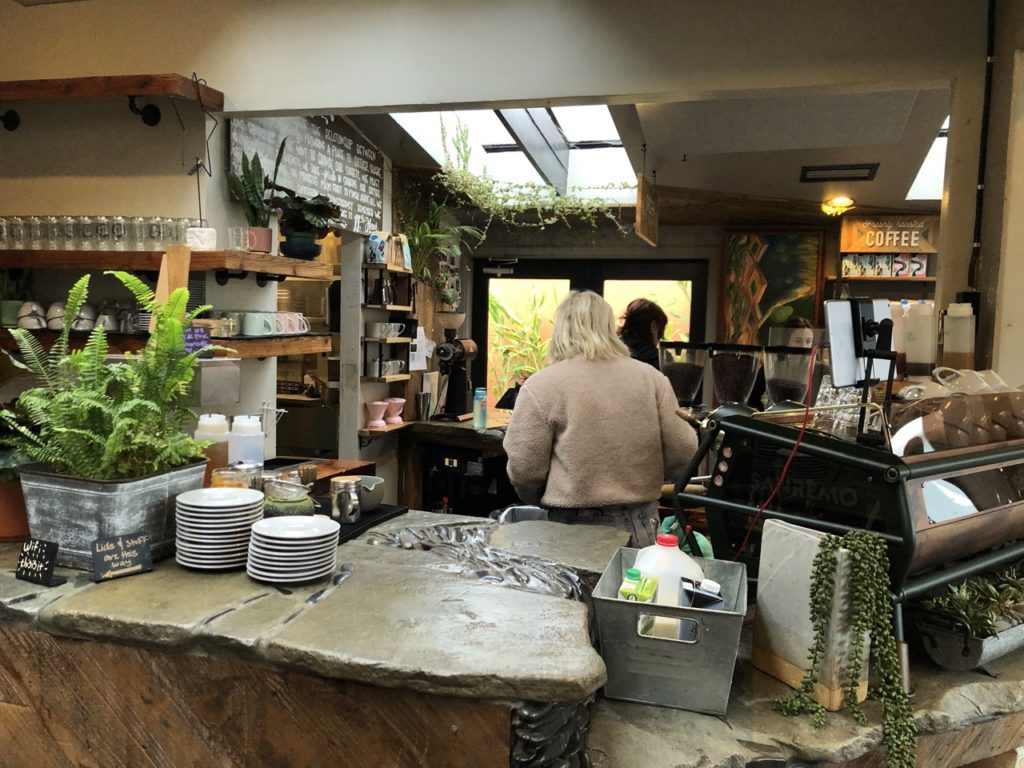
It’s eight in the morning at the 11th Hour Cafe in downtown Santa Cruz and yes!… I order an avocado toast along with a merely plain coffee and set up by the entrance on a bar stool against a polished pine-slab tabletop—just where I can see the patrons as they wander in and order at the all-girls counter, before getting situated. Which they can with plenty of options, for this cafe has seating everywhere: outdoors at the front, where a woman in a green shawl and absurdly tall platform slippers sips her coffee above a golden retriever that waits calmly at her feet, a massive snout resting on broad paws; a large room out back with wooden tables and chairs and a few sofas; and even an outside patio. But we aren’t done.

There’s a coffee roastery at the back, a dimly-lit full bar with high-gloss dark wood veneer that looks primped for an evening act, and store merchandise all over that includes t-shirts, hoodies, ceramic mugs, and assorted coffee gear. Potted green cacti and ferns sprout randomly, like mold on a bread slice. An ancient wooden upright piano broods in a dark corner.

Early that Sunday morning, I had ridden down to the town of Los Gatos to take California Route 17 connecting San Jose with Santa Cruz, across the mountains. The road has few cars out this early but will be jam-packed by noon with families driving down to the beaches and further beyond into the towns around Monterey Bay, eager to be shocked out of their Covid stupors by the cool April mountain wind and the frigid Pacific water.

The highway weaves left and right, with sharp turns and teasing curves as it finds the easiest path through the mountains, like a river yearning for the ocean. Route 17 was built in the early part of the 20th century and was relaid after 1950 when the Lexington Reservoir was created, inundating the towns of Lexington and Alma through which the highway passed.

You notice things on a motorcycle that you never do when you have a roof over your head or pillars bisecting your eyes. The asphalt hurtles faster towards you, the trees loom higher even as the sun plays hide-and-seek behind them, and the wind buffets your head in an unabating reminder of true speed.

Yet you see more and everything looks a bit bigger when there’s no frame around it: hills, ravines, streams, cattle, and the smudged faces of little kids flattened up against car windows as you roar by and offer a friendly thumbs-up (with your left hand please, or you will kill the throttle!)

A motorcycle has multiple controls—a clutch, a hand brake, a foot brake, and gears—creating enough work for every limb to stay busy while coordinating closely, but no control is more important or underrated than the one under your right wrist—the throttle.

A smooth ride has everything to do with a smooth throttle. Rolling off the throttle closes the throttle control value that regulates the amount of air that gets into the engine. As the valve closes it creates a low pressure at the intake of the engine, making the cylinders have to work much harder to compress against a partial vacuum. This saps their energy, drops their power, and rapidly slows down the bike through engine braking. Meanwhile, the engine control unit (or ECU) that constantly monitors the throttle position sensor and a host of other sensors, has already instructed the fuel injectors to starve the cylinders by cutting off their fuel.

Dropping a gear, further amplifies the braking by increasing the engine speed (rpm) even as fuel remains shut off. This creates even more resistance against the pumping action of the pistons which causes the bike to slow down yet further. Modern motorcycles have powerful high-compression engines that react rapidly to very small changes in the throttle.

The opposite happens when that right hand opens the throttle: the bike surges ahead, eager to pass everything. A throttle opened up at low speed with the clutch pulled in and suddenly let out, can deliver power so instantaneous that the forces can swing a bike around its center of gravity before the tires can bite into the ground, causing a wheelie where the front wheel lifts clear off the ground, like a bucking steer trying to lose its rider. A good rider can cross mountains by just controlling the throttle and without ever touching the brakes, if only he could check the juvenile enthusiasm of his fidgety right hand.

I’m betting that Hollywood tough guy, Will Smith—he with that twitchy right arm—wouldn’t be the one to do it.

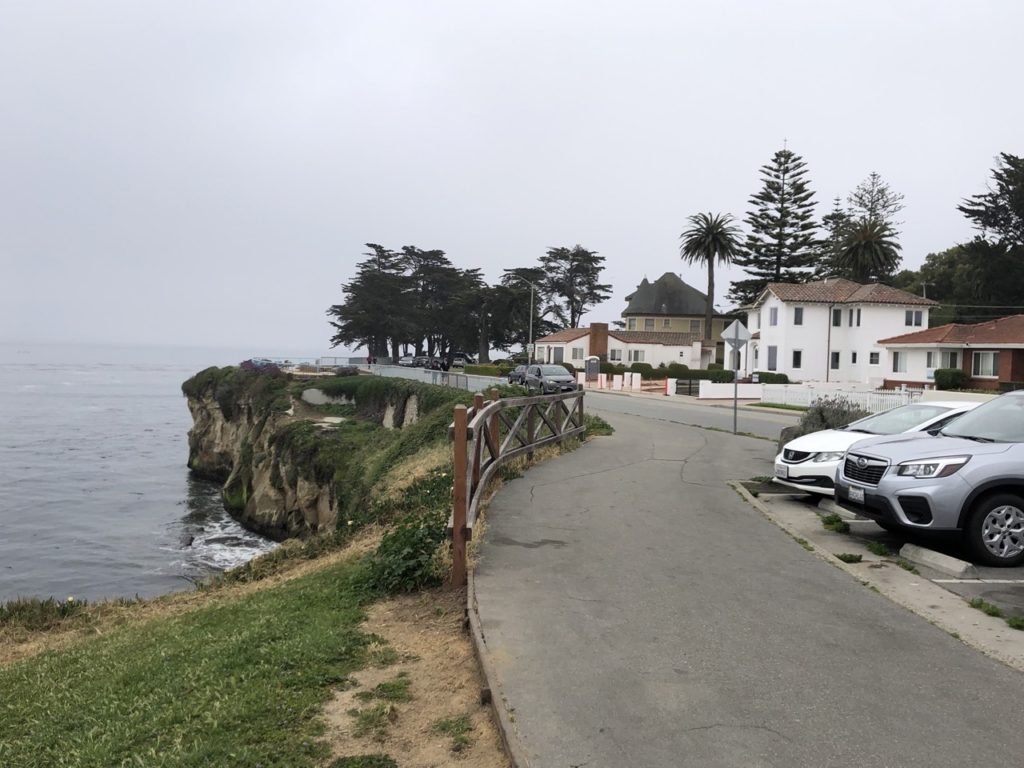
I leave the cafe late morning and ride down towards the ocean looking for Beach Street, where I turn and climb up onto W Cliff Drive that ascends along the edge of a cliff, away from Cowell Beach below me.

To my left, the Santa Cruz wharf runs over eight hundred meters out into the open ocean, as the longest pier on the west coast. It hosts restaurants, gift shops, and wine-tasting salons above, and sea lions below, that rest in the wooden rafters and let everyone know. I pull up at the Lighthouse Field State Beach, at the tip of a broad promontory where the road starts to turn inwards again, park the bike, and walk over to the edge of the cliff above the water.

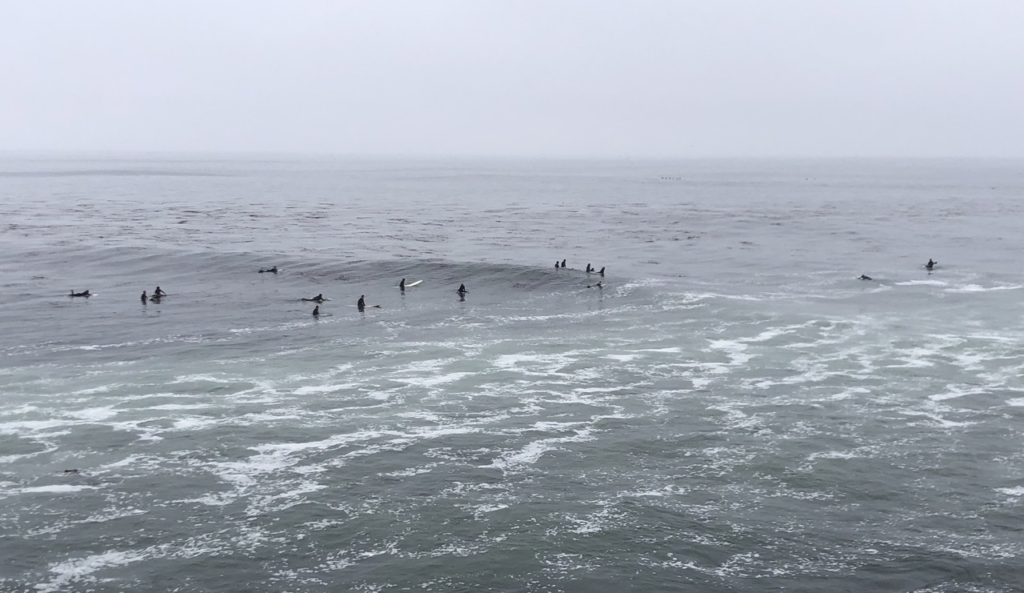
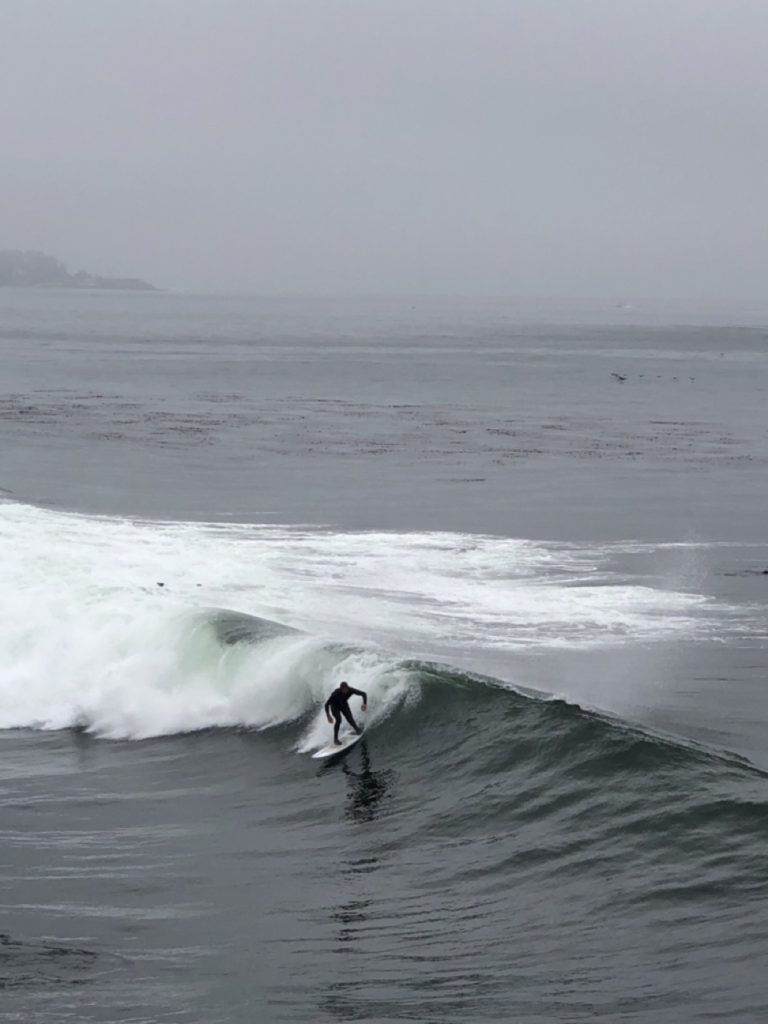
Below me, for hundreds of meters on either side are surfers—riding waves, paddling back to catch the next one, or simply resting atop the surging water to recover from their exertions. This is Steamer Lane, among the most famous surfing locations on the west coast and one of the best places to ride the quintessential North California wave. It has four zones running left to right that generate different waves and surfing experiences.

The wetsuit was invented here in the early 1950s and is often credited to Jack O’Neill—a body surfer and World War II navy pilot—although the inventor was more likely Hugh Bradner, a physicist from the University of California at Berkeley who arrived at this neoprene invention when he studied the problems encountered by frogmen in frigid waters.

I’m guessing male shrinkage wasn’t one of them.

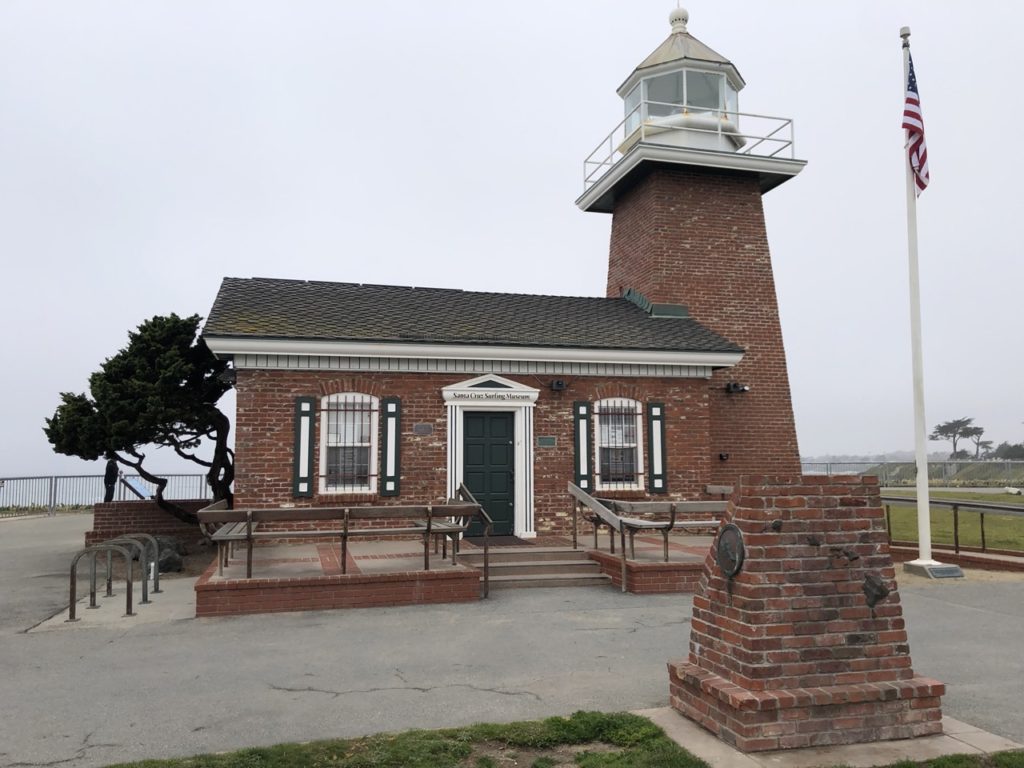
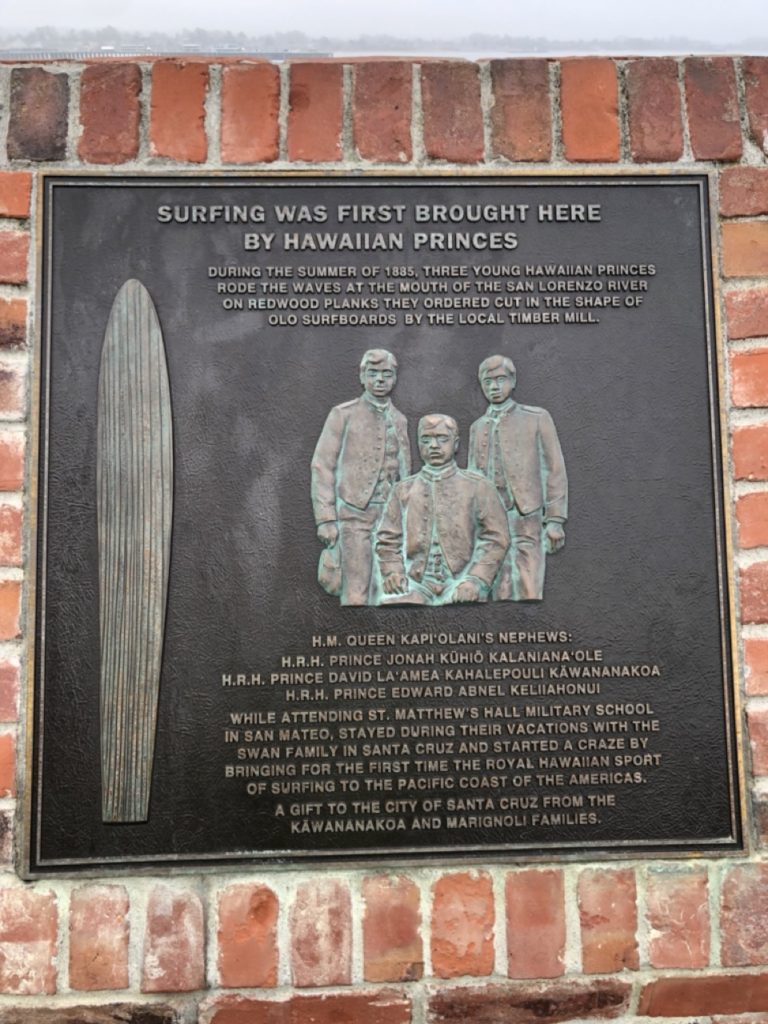
Surfing was brought to California in 1885 by three Hawaiian princes who rode the Santa Cruz waves on surfboards crafted with Santa Cruz redwood. Surfing likely originated in the south Polynesian islands before it made its way to Hawaii and consumed its idle and bucolic royalty. I walk by the Surfing Museum where a plaque illustrates the story. The brothers took their original surfboards back to Hawaii. More than a hundred years later, in 2015, the boards were brought back to Santa Cruz for a historic visit.

I start up the Triumph and ride across town—past gas stations, Mexican restaurants, Chinese takeouts, closed real estate offices and art studios, to get back onto highway 17.

Miles later a white Ferrari screams past, doing at least thirty miles over the speed limit as it swings around in a wide curve. I can proudly tell you that my right arm didn’t even twitch.